

Pediatric Rehabilitation Medicine

The Division of Pediatric Rehabilitation Medicine aims to prevent disabilities and reduce their severity through
the early detection and treatment of children with developmental issues caused by congenital or acquired diseases.
The Division of Pediatric Rehabilitation Medicine evaluates and treats children with a wide range of conditions, including prematurity, cerebral palsy, developmental delay, intellectual disability, dysphagia, speech disorders, cerebrovascular disease, traumatic brain injury, spinal cord injury, neuromuscular and genetic diseases, heart and lung related diseases, tumors, and musculoskeletal disorders such as scoliosis and toe-in gait.
Pediatric rehabilitation promotes healthy development through physical, occupational, and speech-language therapies, tailored to each child's functional level and degree of disability. As children grow into school age and adolescence, their treatment needs change. Accordingly, we provide age-appropriate treatment plans and programs tailored to each stage of a child’s life.
We are committed to supporting each child’s unique journey through collaboration across multiple specialties, ensuring optimal physical, mental, social, vocational, and educational development. Our goal is to help children integrate into their peer groups and society, enabling them to grow into independent individuals.
Clinical Services of Pediatric Rehabilitation Medicine
Developmental Delay Clinic
This clinic investigates the causes of developmental delay in infants and children, evaluates the severity of the delay using internationally recognized criteria, and provides appropriate rehabilitation therapy. Since early diagnosis and intervention are crucial, we may recommend hospitalization for comprehensive evaluation and treatment. Further, we provide family education to support effective home-based therapy.
Prosthetics, Orthotics, and Wheelchair Clinic
This clinic aims to prevent and correct musculoskeletal complications in children with disabilities from various causes. It operates every Tuesday morning, assessing the need for prosthetic and orthotic devices or wheelchairs and providing customized equipment to support each child's functional development.
Botulinum Toxin Injection
Botulinum toxin injections are administered as a targeted treatment for children with gait disturbances or difficulties in daily activities caused by muscle spasticity, often resulting from central nervous system conditions such as cerebral palsy. Injections are typically delivered to spastic muscles such as the hip adductors, knee flexors, ankle plantar flexors, and elbow flexors. Active rehabilitation therapy follows the injection, and plaster casting or assistive devices may be used as needed.
Pediatric Rehabilitation Therapies
- Pediatric Physical Therapy : Neurodevelopmental Therapy, Vojta Therapy, Cardiac Rehabilitation, Pulmonary Rehabilitation, Musculoskeletal Rehabilitation, Range of Motion and Strengthening Exercises, Balance Integration Training and Gait Training
- Pediatric Occupational Therapy : Occupational Therapy, Feeding and Swallowing Therapy, Sensory Integration Therapy, Cognitive Therapy
- Pediatric Speech & Language Therapy : Language Therapy, Speech Sound Therapy, Fluency Therapy, Voice Therapy
Pediatric Physical Therapy
- Neurodevelopmental Therapy : Neurodevelopmental Therapy (NDT), also known as Bobath Therapy, is designed to inhibit abnormal postural patterns and promote normal motor responses. Children with developmental delays often lack sufficient experience with typical movement patterns, which are essential for developing proper sensorimotor integration. This therapy provides guided movement experiences to help children develop normal motor control and postural stability.
- Vojta Therapy : Vojta Therapy involves stimulating specific reflex zones on the body while the patient is placed in defined postures, thereby activating innate movement patterns. It can be applied at any age and is particularly effective in infants under one year of age. The goal is to promote normal motor development by activating central motor coordination pathways.
- Cardiac Rehabilitation : Cardiac rehabilitation for pediatrics aims to prevent and treat reduced cardiopulmonary function associated with congenital or acquired heart diseases. Individualized programs may include breathing exercises, flexibility and aerobic training, and resistance exercises, all tailored to each child’s clinical condition and functional level.
- Pulmonary Rehabilitation : Pulmonary rehabilitation for pediatrics addresses and respiratory dysfunction in children with congenital or acquired pulmonary conditions. Interventions may include airway clearance techniques, breathing exercises, air stacking exercises, cough facilitation, flexibility exercises, aerobic exercises, and strengthening exercises, all tailored to the child’s individual needs.
- Musculoskeletal Rehabilitation : Musculoskeletal rehabilitation helps children with conditions such as scoliosis to improve posture and maintain proper alignment. Therapeutic approaches include postural correction, muscle strengthening, and flexibility training, all aimed at promoting optimal musculoskeletal function and preventing further deformities.
- Range of Motion and Strengthening Exercises : These exercises help improve joint flexibility and muscle strength in children with movement limitations due to injury, neurological disorders, or developmental conditions. Range of motion exercises help maintain or restore joint mobility, while strengthening exercises enhance muscle strength to support posture and functional movement. Together, they promote independence in daily activities and help prevent complications such as contractures or muscle atrophy.
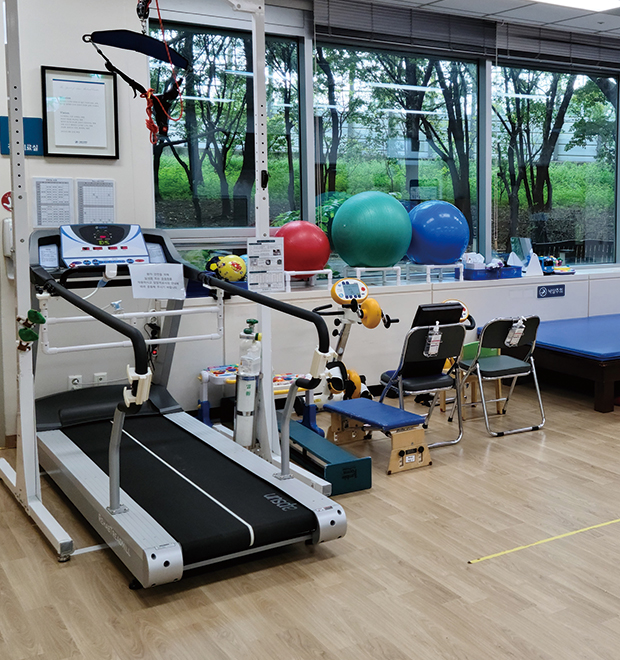
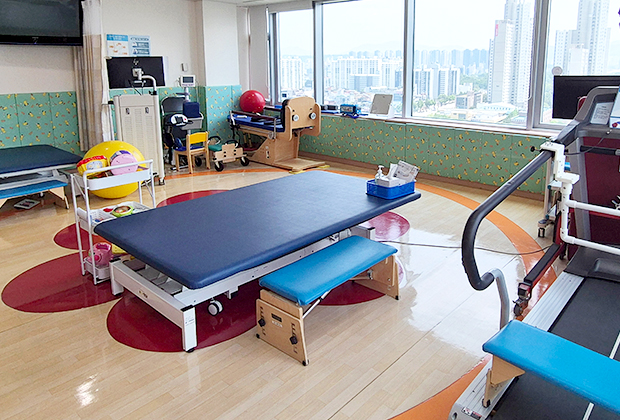
- Balance Integration Training and Gait Training : Balance and gait training are designed to improve postural control and support the development of independent ambulation. Interventions may include sensory integration activities to enhance proprioception and spatial awareness, as well as partial weight-bearing treadmill training to facilitate gait development.
Pediatric Occupational Therapy
- Occupational Therapy : Children who experience difficulties in performing various activities of daily living due to impairments in sensory-motor functions, perceptual and cognitive processing, social interaction, communication, or self-care skills such as feeding, washing, dressing are comprehensively assessed using standardized, evidence-based evaluation tools. Based on these assessments, individualized intervention plans are developed. The plans incorporate targeted sensory integration therapy, motor skill development, perceptual and cognitive training, social skills facilitation, and practice of adaptive daily living activities. The overarching goal is to enhance the child’s functional independence and participation across various environments, including home, daycare, kindergarten, and school. Where appropriate, assistive devices such as upper limb orthoses and adaptive equipment are used to optimize functional outcomes.
- Feeding and Swallowing Therapy : Children with oral feeding difficulties due to motor coordination deficits, sensory processing challenges, cardiopulmonary limitations, or structural anomalies of the oral and laryngeal mechanisms undergo a comprehensive multidisciplinary assessment. Interventions are individualized and may include oral sensory stimulation, oral-motor facilitation, laryngeal strengthening exercises, and structured feeding practice to promote safe oral intake and improve nutritional status. When necessary, neuromuscular electrical stimulation (NMES) may be used to target specific weakened muscles, particularly in the laryngeal region, to support the recovery of swallowing function.
- Sensory Integration Therapy : For children with sensory processing disorders characterized by hyper- or hypo-sensitivity, sensory modulation difficulties, impaired vestibular and proprioceptive processing, or executive dysfunction affecting motor control and behavioral regulation, sensory integration therapy is implemented. This therapy is designed to enhance the child’s ability to process and integrate sensory inputs, facilitating appropriate adaptive responses to environmental stimuli. The intervention promotes improved motor coordination, behavioral self-regulation, and increased participation in age-appropriate daily activities.
- Cognitive Therapy : Children with developmental delays or deficits in cognitive domains such as attention span, sustained concentration, memory retention, executive functioning, and problem-solving skills undergo systematic evaluation. Cognitive interventions include functional, activity-based training, complemented by computer-assisted cognitive rehabilitation programs. These interventions aim to strengthen cognitive processing abilities, supporting continuous learning, functional independence, and successful participation in educational and social environments.
Pediatric Speech & Language Therapy
- Language Therapy : When language comprehension or expression is delayed or significantly impaired, intervention is provided to support language development. Family education is also offered to encourage early intervention for infants and toddlers with, or at risk of, language delay or disorder.
- Speech Sound Therapy : When speech sound errors are unusually frequent or persist beyond the expected age, intervention is provided to help children produce age-appropriate speech sounds. Family education is also provided to support the development of accurate articulation.
- Fluency Therapy : When speech fluency is disrupted, intervention is provided to reduce disfluency and enhance overall fluency. Family education is also offered to promote fluency-facilitating strategies and to help create a supportive communication environment.
- Voice Therapy : When voice production is impaired, such as after a tracheostomy, intervention is provided to improve respiratory support and phonation. Augmentative and alternative communication (AAC) methods may also be introduced for children with persistent voice difficulties.
Advancing Toward the World
We contribute to the advancement of global pediatric rehabilitation medicine by leading sessions on congenital heart disease rehabilitation, pediatric ICU rehabilitation, and rehabilitation in preterm infants at the European Academy of Childhood-onset Disability (EACD). In addition, we actively collaborate with leading rehabilitation institutions in the United States and Europe through international training programs and collaborative partnerships.
Commitment to Research, Education, and Innovation
The Division of Pediatric Rehabilitation Medicine at Asan Medical Center regularly hosts the Asan Rehabilitation Symposium and specialized workshops on topics such as early assessment and intervention and PICU rehabilitation to share the latest clinical knowledge.
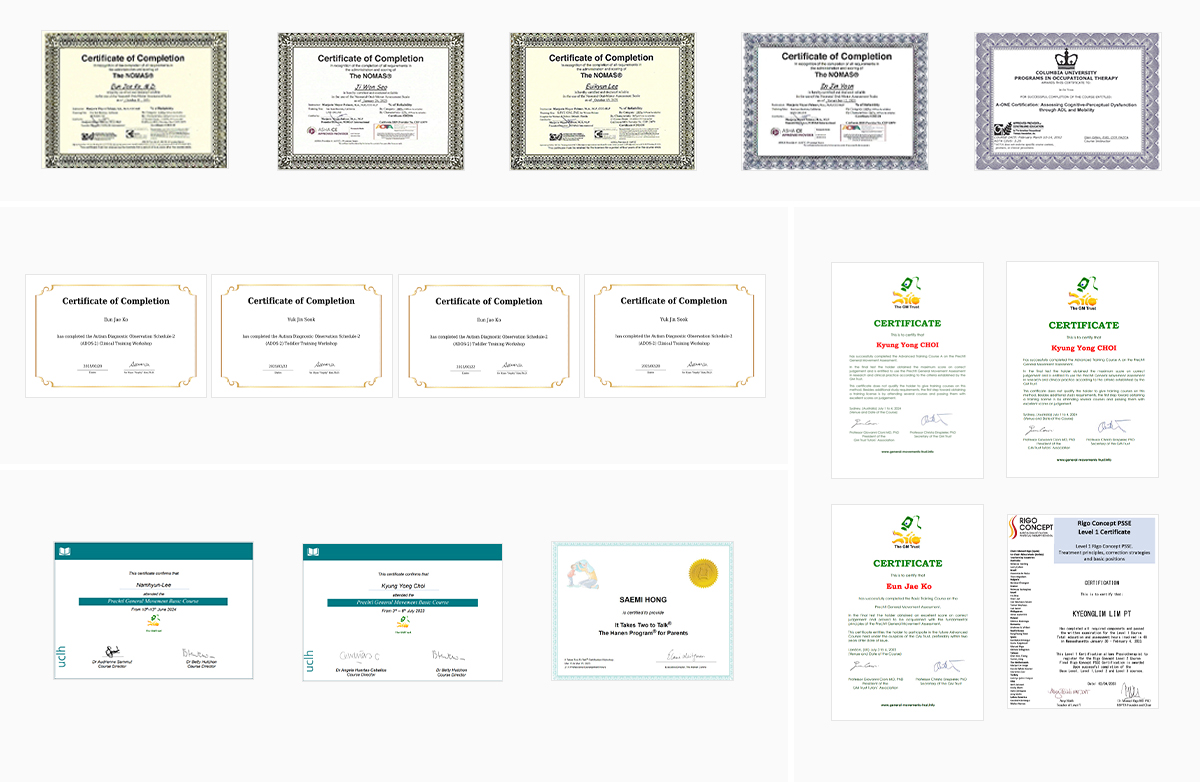
The division actively participates in both domestic and international conferences and has obtained numerous international certification, including GMA (Prechtl General Movement Assessment), NOMAS (Neonatal Oral Motor Assessment Scale), Rigo Concept PSSE (Physiotherapeutic Scoliosis Specific Exercises), ITTT (It Takes Two to Talk), and ADOS (Autism Diagnostic Observation Schedule).
Doctors
-
Eun Jae Ko - Departments
-
Pediatric Rehabilitation Medicine, Rehabilitation Medicine, Childhood Respiratory and Allergy Center, Cardiovascular Disease Prevention & Rehabilitation Center, Gynecologic Cancer Center, AMC Cancer Institute
- Specialty
-
Pediatric Rehabilitation, Pediatric Cardiac and Pulmonary Rehabilitation, Gynecologic Cancer Rehabilitation, Adults with Cerebral Palsy
-
Seung Hak Lee - Departments
-
Pediatric Rehabilitation Medicine, Cardiology, Rehabilitation Medicine, Stroke Center, Cardiovascular Disease Prevention & Rehabilitation Center, Asan Medical Center Heart Institute, AMC Cancer Institute, Lung Cancer Center
- Specialty
-
Neurorehabilitation, Cardiac Rehabilitation, Pulmonary Rehabilitation, Pediatric Rehabilitation, Musculoskeletal Rehabilitation(Low back pain), Intraoperative Neurophysiologic Monitoring
-
Seungwoo Cha - Departments
-
Rehabilitation Medicine, Pediatric Rehabilitation Medicine, Stroke Center, Parkinson Alzheimer Center, Brain Tumor Center, Head and Neck Cancer Center, Breast Cancer Center
- Specialty
-
Neurorehabilitation, Dysphagia Rehabilitation, Spinal Cord Injury Rehabilitation, Cancer Rehabilitation, Pediatric Rehabilitation
-

YOON SOO HOON - Departments
-
Pediatric Rehabilitation Medicine, Rehabilitation Medicine
- Specialty
-
WOOCHUL SON - Departments
-
Pediatric Rehabilitation Medicine, Rehabilitation Medicine
- Specialty